VISUAL INSPECTION · LONGITUDINAL MEMORY
The inspection that remembers what it saw.
Upload a capture. Afterimage checks its quality, anchors it to the stored baseline, measures the change and stops when a person must decide.
HOW THE LOOP BRANCHES
Four captures, four different answers.
An illustration of the path each capture takes. Try them in the app: the first photo sets the reference, and each result links the next.

1 · The healthy panel
The agent keeps it to compare against later.
- 1 quality done
- 2 alignment skipped
- 3 change skipped
- 4 closer look skipped
- 5 severity skipped
result
First photo of this asset, saved as its reference

2 · The same photo, shaken
It is blurry: the agent asks for another one.
- 1 quality stopped here
- 2 alignment skipped
- 3 change skipped
- 4 closer look skipped
- 5 severity skipped
result
This photo is too poor to judge

3 · The same panel, with a crack
The agent finds the damage and waits for a person to confirm it.
- 1 quality done
- 2 alignment done
- 3 change done
- 4 closer look skipped
- 5 severity waiting
result
A person has to look at this change
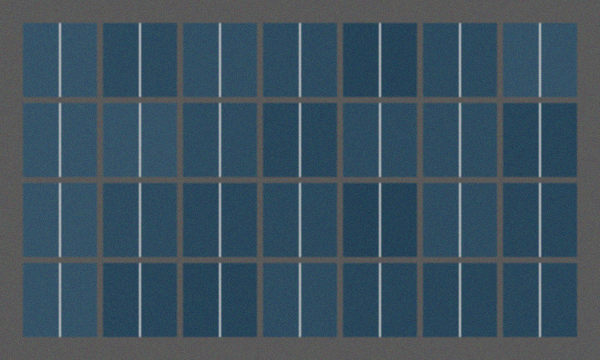
4 · A different panel
It does not recognise it, so it does not guess.
- 1 quality done
- 2 alignment stopped here
- 3 change skipped
- 4 closer look skipped
- 5 severity skipped
result
This is not the asset in memory
HOW IT WORKS
The model describes. The policy decides.
Six perception tools produce measurements; one policy module owns every threshold.
Capture
Reject unusable images before they can contaminate memory.
Compare
Align the same asset, isolate the changed region and measure it.
Act
Record mild changes, refuse uncertain matches or ask a person to approve.
MEMORY
A baseline is superseded, never overwritten.
Every asset keeps its inspections, the reference in force and the exact trace behind each result.
THE SYSTEM
One inspectable pipeline, end to end.
OpenCV 5 perceptionFastAPI applicationDynamoDB memoryS3 images and tracesarm64 Lambda delivery
Honest limits
- 29 evaluation scenarios are still a small sample.
- One global frame-coverage threshold does not generalise.
- A severe finding still requires a human decision.
Inspect the next capture. Keep the reason.
Run the real pipeline with the bundled examples or your own image.